

Guided Dreamwork & Imagination
Where imagination and dreams are a gateway to self-knowledge

YOUR CHILD IS AMAZING
And the struggles are real.The outbursts. The anxiety. The stuckness. The big feelings that seem impossible to explain.
You already know that simply fixing, correcting or managing behaviour isn't the long-term answer. You've probably tried many things - therapy, activities, time in nature, co-regulation, sensory experiences, keeping your child stimulated and supported.
And all of these things can be wonderful. But perhaps something is still missing. Something deeper.
WHAT IF YOUR CHILD COULD BEGIN TO UNDERSTAND THEMSELVES?
The real shift begins when a child can start to notice:
What am I feeling?
What is happening inside me?
What do I need?
Why do I react this way?
Self-awareness isn't something we can teach a child from a book. It needs to be experienced. And children have a natural language for experience: sensation · image · movement · imagination · play.
IMAGINATION IS A BRIDGE TO SELF-KNOWLEDGE
What if your child could explore their emotions without having to sit down and explain them?
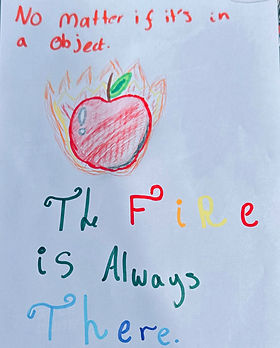
Through spontaneous imagination and guided dreamwork, I create playful experiences where children can explore their inner world through images, stories, characters and movement. A child might meet an animal. A character might appear. A landscape might emerge. A story might unfold. And sometimes, through that character or story, a child can express something they aren't yet ready to say directly.
The imagination gives them another way in.
There is no right answer. No need to perform. We simply become curious about what appears.
THE DREAM
Guided Imagination & Dreamwork for Children:
This is a playful, experiential approach to developing self-awareness, emotional understanding and connection with the inner world.
I use guided imagery and spontaneous imagination to help children explore what is happening beneath the surface. We may then bring what they discover into drawing, movement, conversation or creative play. The child leads. I provide the framework, the questions and the safe space to explore.
THE PROCESS
01 — WE SETTLE
We begin by creating a sense of safety and connection, using whatever helps your child arrive in the moment.
02 — WE JOURNEY
Through guided imagery, your child is invited into an imaginative experience.
03 — WE FOLLOW
Rather than telling your child what their experience means, we become curious about what they notice.
04 — WE EXPRESS
The experience can be explored through drawing, movement, storytelling, clay or conversation.
05 — WE INTEGRATE
Your child has an opportunity to connect their imaginative experience with their everyday world.
WHAT CAN YOUR CHILD DISCOVER?
Every child is different, so there is no predetermined outcome.
But through this kind of experiential exploration, children can have opportunities to develop:
Self-awareness
Noticing feelings, sensations, thoughts and reactions.
Emotional vocabulary
Finding new ways to communicate experiences that can be difficult to put into words.
Self-expression
Having a space where their inner experience can be explored without judgement.
Confidence
Discovering that their own ideas, perceptions and imagination have value.
Self-understanding
Beginning to recognise patterns, needs, wishes and responses.
Agency
Experiencing themselves as an active participant in their own inner world.
THIS IS NOT ABOUT TELLING YOUR CHILD WHO THEY ARE
It's about giving them the space to discover it.
I don't interpret your child's imagination for them or tell them what their dreams “mean”.
Instead, we explore together.
A SESSION FOR THE CHILD WHO...
-
has big emotions but struggles to explain them
-
has a vivid or spontaneous imagination
-
loves stories, fantasy or symbolic play
-
finds talking directly about feelings difficult
-
would benefit from exploring emotions in a playful way
-
needs a low-pressure space to express themselves
-
is curious about dreams and their inner world

Frequently asked questions

Get in Touch
If you feel this may support your child:
-
Book an initial session - at the comfort of your own home - £ 40, usually sessions are £50
-
Or reach out for a brief phone chat to discuss your child’s needs
Find me on samarahana@protonmail.com